Double glass unit
| Structure | Area | Aspect ratio | Max side length |
|---|---|---|---|
| 4 / x / 4 | up to 3.4 m² | 1:6 | 2500 mm |
| 6 / x / 4 | up to 4.5 m² | 1:6 | 2500 mm |
| 6 / x / 6 | up to 6.5 m² | 1:10 | 4000 mm |
| 8 / x / 8 | up to 9.0 m² | 1:10 | 4000 mm |
A well-considered choice of glazing tailored to your needs ensures comfortable living for many years, making homes energy-efficient and secure.
Choosing the right glass unit is a decisive factor in the overall quality of a window. As standard, we supply our windows with energy-saving (selective) glass units, but the glass unit can also have other properties requested by the customer.
Without reducing energy-saving properties, windows can be made with glass units that have solar protection properties, preventing living spaces from overheating during summer heat, or the glass can be made safer by choosing tempered or laminated glass.
A well-considered choice of glazing tailored to your needs ensures comfortable living for many years, making homes energy-efficient and secure.
Explore the properties of the glass on our website or contact our sales representative, who will help you make your choices.
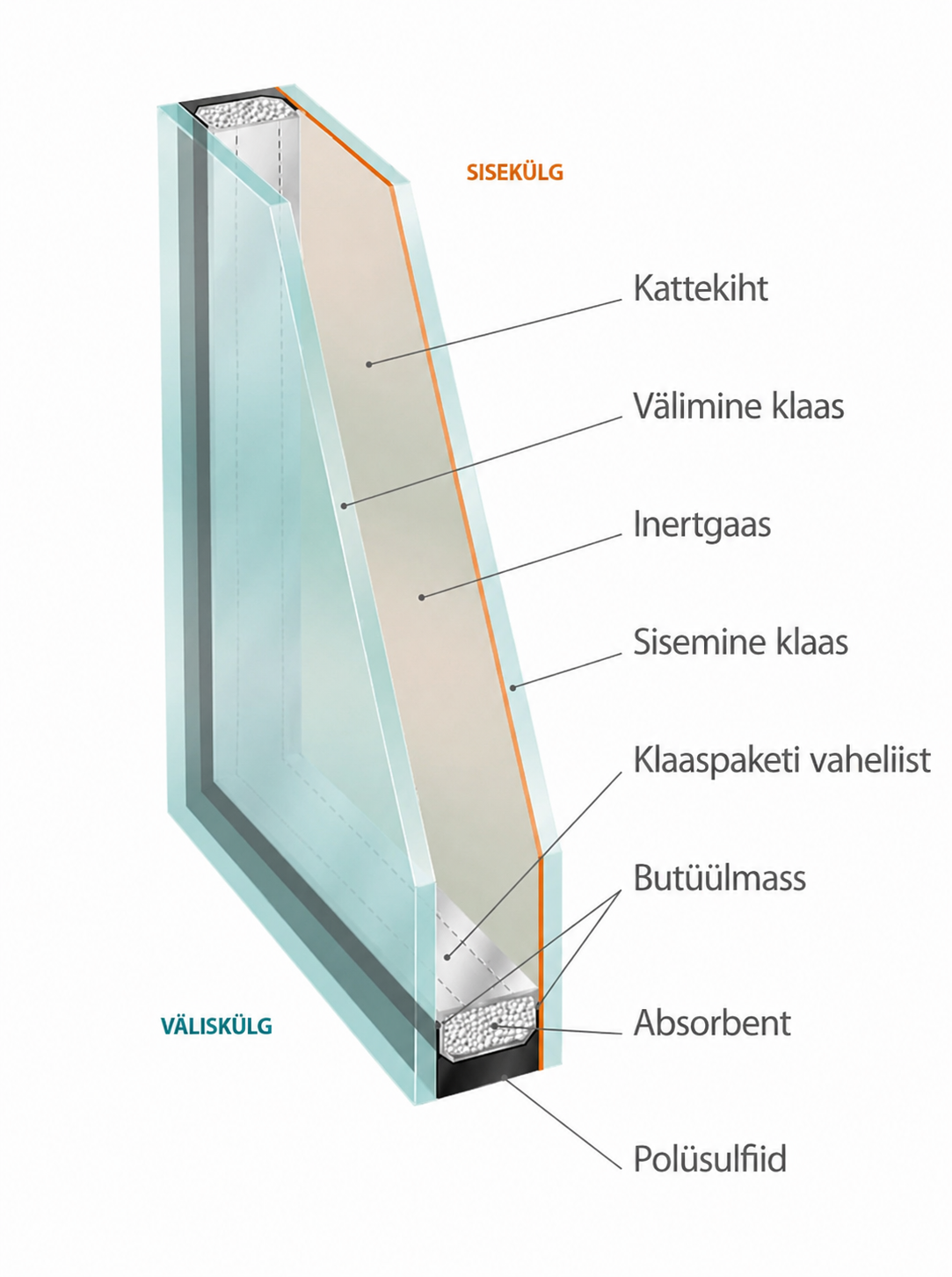
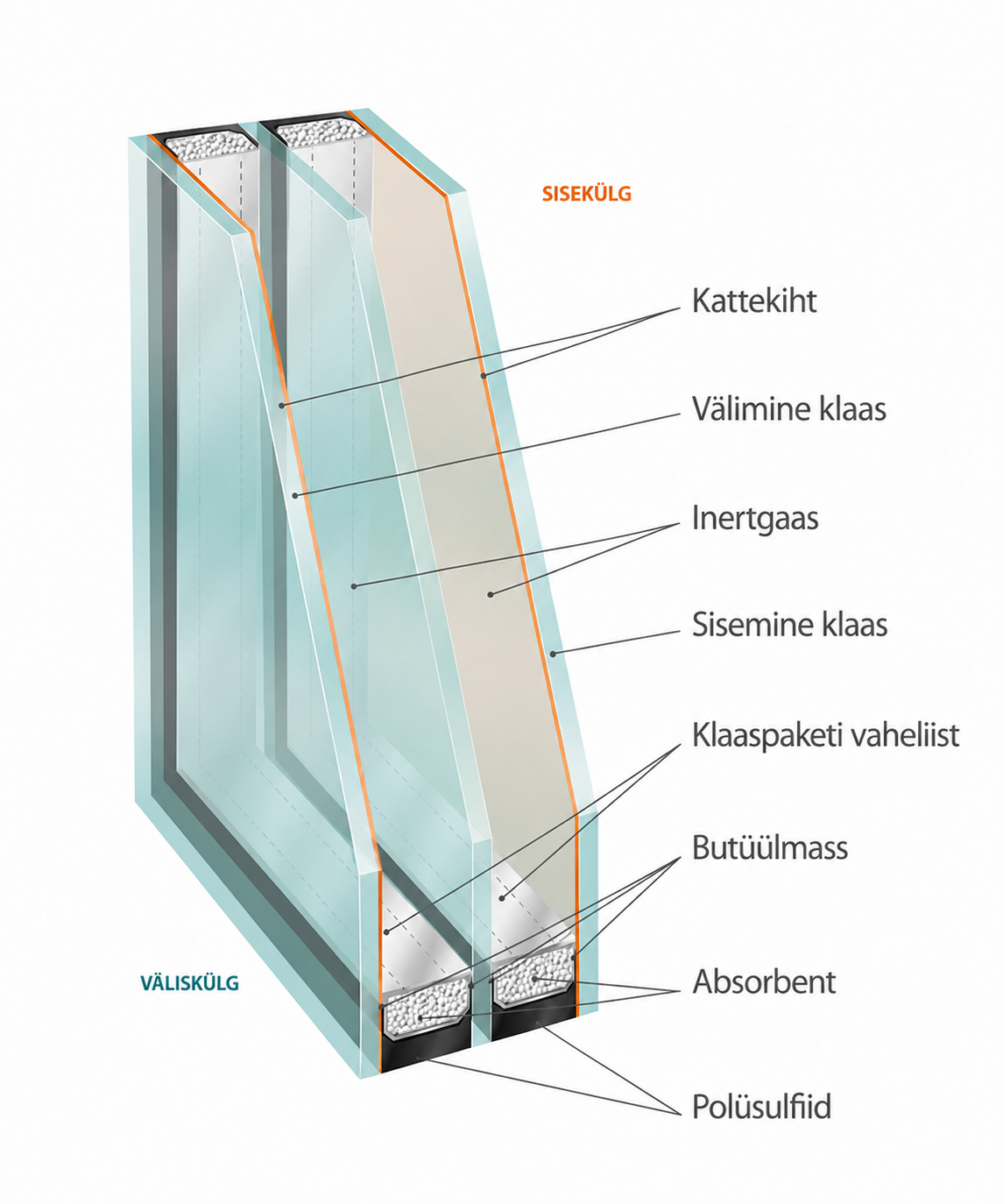
A glass unit consists of two or more panes that are hermetically joined together. The glass units are filled to 90% with argon, which significantly improves the window's thermal insulation. The panes are firmly bonded to the spacer bar with butyl and sealant mastic. The butyl makes the glass unit hermetic, preventing external moisture from entering the glass unit.
The chambers between the panes are dried by a special absorbent inside the spacer bar, which absorbs moisture.
| Structure | Area | Aspect ratio | Max side length |
|---|---|---|---|
| 4 / x / 4 | up to 3.4 m² | 1:6 | 2500 mm |
| 6 / x / 4 | up to 4.5 m² | 1:6 | 2500 mm |
| 6 / x / 6 | up to 6.5 m² | 1:10 | 4000 mm |
| 8 / x / 8 | up to 9.0 m² | 1:10 | 4000 mm |
| Structure | Area | Aspect ratio | Max side length |
|---|---|---|---|
| 4 / x / 4 / x / 4 | up to 3 m² | 1:6 | 2500 mm |
| 6 / x / 4 / x / 4 | up to 3.5 m² | 1:6 | 2500 mm |
| 6 / x / 4 / x / 6 | up to 4.5 m² | 1:10 | 3000 mm |
| 6 / x / 6 / x / 6 | up to 7.0 m² | 1:10 | 4000 mm |
The standard offering includes a triple glass unit with a warm-edge spacer bar Chromatech Ultra, which improves energy efficiency and minimises condensation forming at the edge of the window.
The selective coating and argon filling significantly improve the window's thermal insulation. The standard 4-16Ar-4Sel configuration ensures a low U-value and energy saving.
Body-tinted, reflective and multifunctional glass control the amount of solar energy entering. Suncool and IPASOL glass balance light transmission and heat blocking.
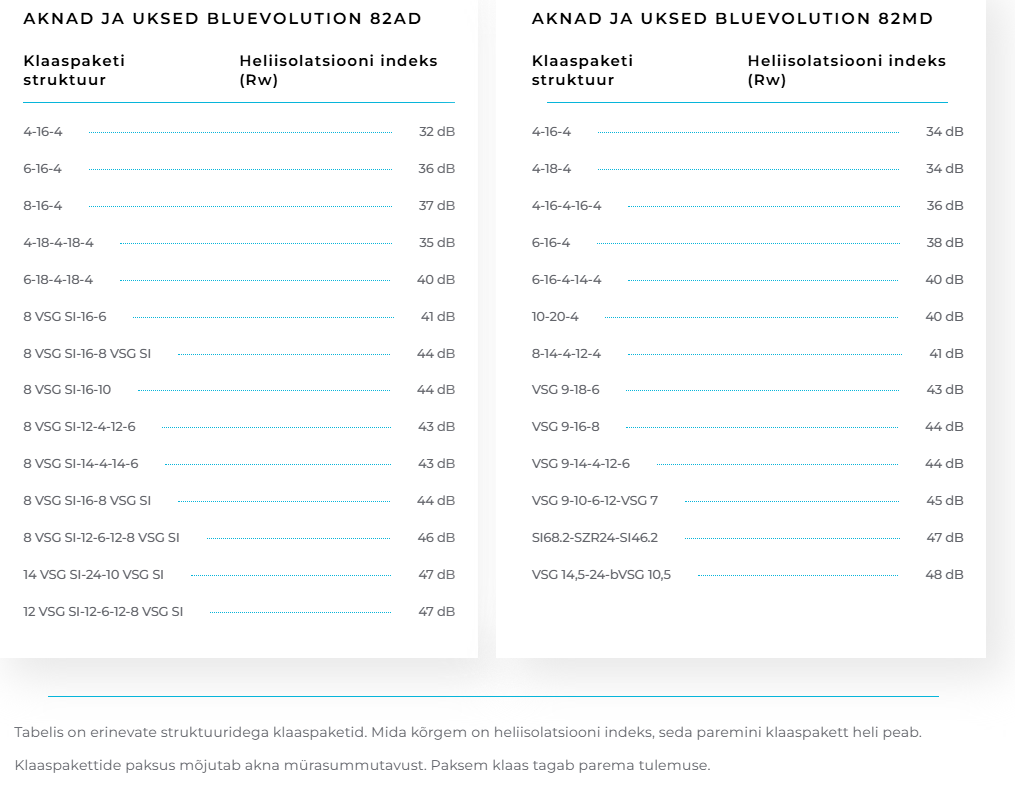
Glass with SILENCE acoustic film achieves sound insulation of up to 48 dB. Glass thickness, asymmetry and cavity width affect the level of noise reduction.
Tempered glass is 5x stronger and breaks into small, blunt pieces. Laminated glass stays intact when broken thanks to the PVB film, providing UV protection and better sound insulation.
In the Nordic climate, openings predominantly use triple glass units that, as a standard solution, have energy-saving (selective) glass, with the chambers of the unit filled with argon gas.
The energy efficiency properties of glass are measured Ug-value by means of: the lower the U-value, the better the glass's thermal insulation.
It is estimated that heat loss through windows is approximately 26% of the building's total heat loss. Modern energy-saving windows help to reduce this loss — keeping warmth inside and cold outside, thereby also lowering heating costs. Windows are the thinnest point in a building's external wall, so they require special attention.
Quality, thermally insulating windows with glass units that have good thermal properties are the foundation of home insulation.
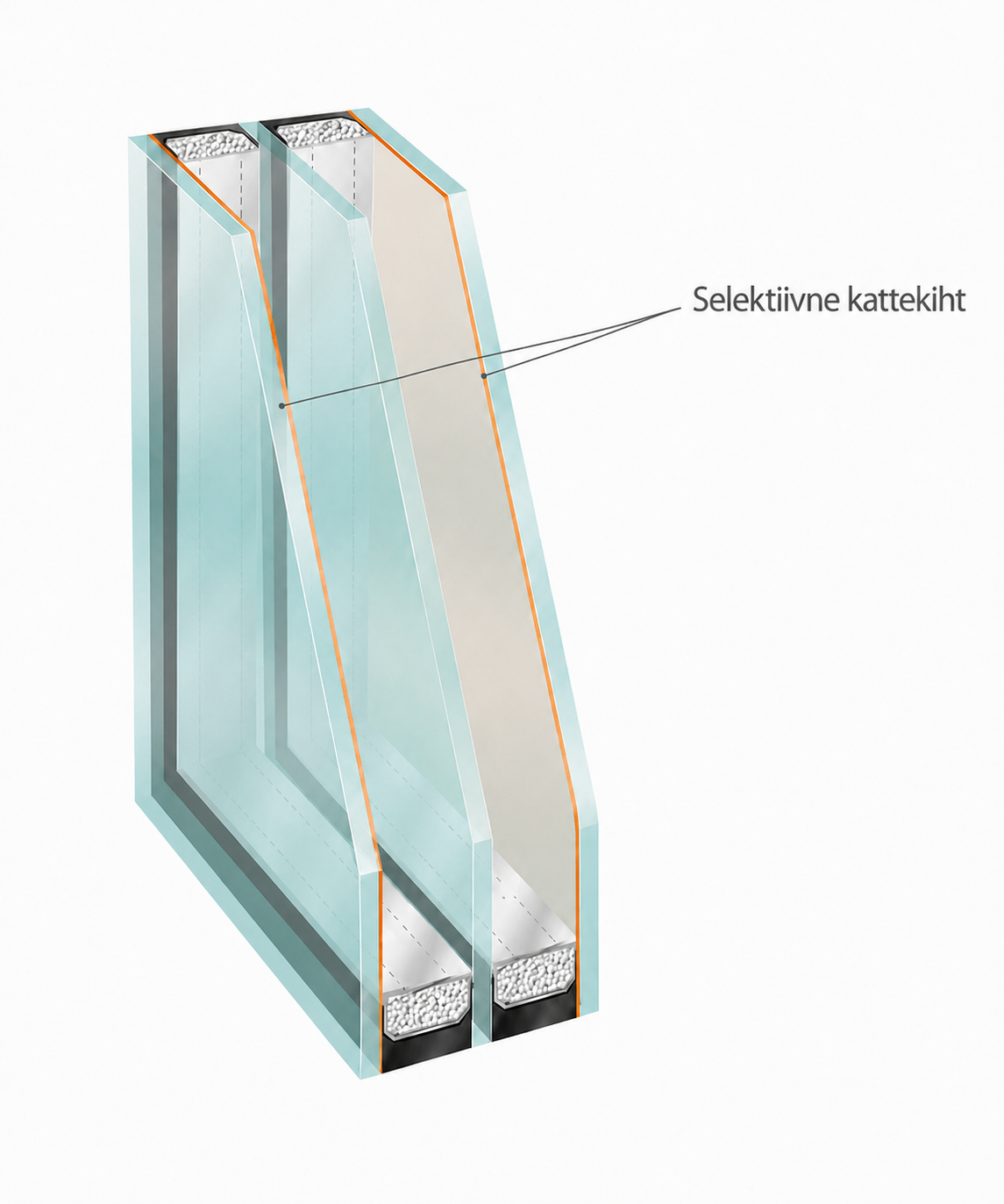
The glass unit is usually the largest part of a window by area, so the window's overall thermal insulation depends significantly on the glass unit. In Estonia today, the glass units used as standard are energy-saving glass with a selective coating.
The selective coating reflects escaping heat back into the room and thereby helps reduce heat loss. The selective coating does not change the tint of the window glass nor reduce light transmission.
The glass units are filled to 90% with argon, which significantly improves the window's thermal insulation.
Argon is an inert gas with lower thermal conductivity than air. This means heat moves more slowly through argon, so in winter the room's warmth cannot escape. Argon is odourless and non-toxic, and is hermetically sealed inside the glass unit. The window industry has been using argon for decades.
The spacer bar is an element located at the edge of the glass unit that keeps the panes at the correct distance within the unit.
Available options include an aluminium spacer bar, suited to windows where thermal insulation is not a priority and only an affordable price matters, or a hybrid-material bar known as a “warm edge” spacer. Chromatech Ultra.
In glass units that use the Chromatech Ultra spacer bar, the overall thermal insulation of the window is better and the likelihood of condensation forming on the lower glass surface is significantly reduced.
For Chromatech Ultra spacer bars we offer a choice of colours black (RAL9004) or light grey (RAL7035).
For rooms where the energy and light from sunlight are disruptive or there is a risk of overheating, solar-control glass can be ordered for the windows. Using solar-control glass on the south and west sides of a building helps prevent rooms from overheating.
Solar-control glass falls into three main types: body-tinted glass, reflective glass and transparent multifunctional glass. Solar-control glass reduces the passage of solar energy (the g-value) and helps prevent rooms from overheating. By using a glass with solar-control properties as the outer pane, the glass unit can be combined with energy-saving glass, which in turn ensures the expected level of thermal insulation.
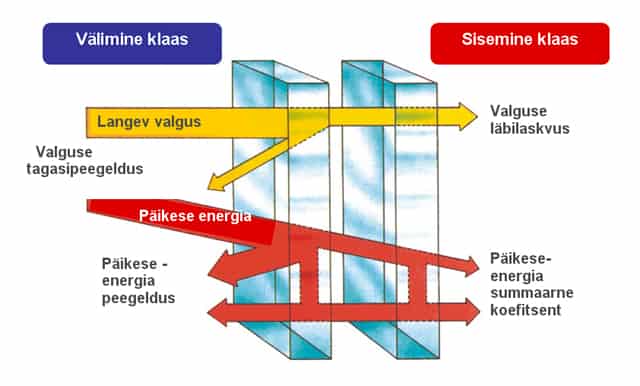
The selection includes solar control glass of varying strengths. They look like „ordinary" glass units, but a special coating reduces the transmission of the sun's energy.
Within the solar control glass range, these glass units have higher light transmission (LT%) than body-tinted or reflective glasses.
The selection includes grey and bronze tone. Thicker glass gives a darker tone and better energy rejection but lets less light through than solar control glass with a neutral appearance.
Body-tinted glass is an important design element for the whole building and provides more privacy when the interior is dimmer compared to the outdoor light.
The selection includes silver, bronze and bright with a mirror effect glass. Thicker glass gives a darker tone and better energy rejection but lets less light through than solar control glass with a neutral appearance.
Mirror glass is an important design element for the whole building and provides more privacy when the interior is dimmer compared to the outdoor light.
Unwanted sounds, i.e. noise, are a very high stress factor, especially in homes. That is precisely why, in a high-noise environment, it is advisable to choose a solution that ensures better sound attenuation.
Depending on the requirements, the glass units come in different combinations to achieve the desired sound insulation.
The first thing to keep in mind with sound reduction is that a structure is only as good at dampening sound as its weakest link. In other words – there is no benefit to a high-quality sound-insulating glass unit if the frame fails to block sound transmission. PLASTO frame and sash profiles have excellent sound reduction figures, and by pairing them with a glass unit suited to your needs, we can produce windows with sound insulation properties that meet the customer's exact expectations.
The sound-insulating properties of a glass unit can be improved by combining panes of different thicknesses, spacer bars of different widths and the use of laminated glass.
The best way to achieve sound insulation is to use special laminated glass with an acoustic film.
Laminated glass can also be combined in a glass unit with other glass types, such as solar control and energy-saving glass, creating units that, in addition to effective sound reduction, provide good solar protection and thermal insulation that meets today's standards.
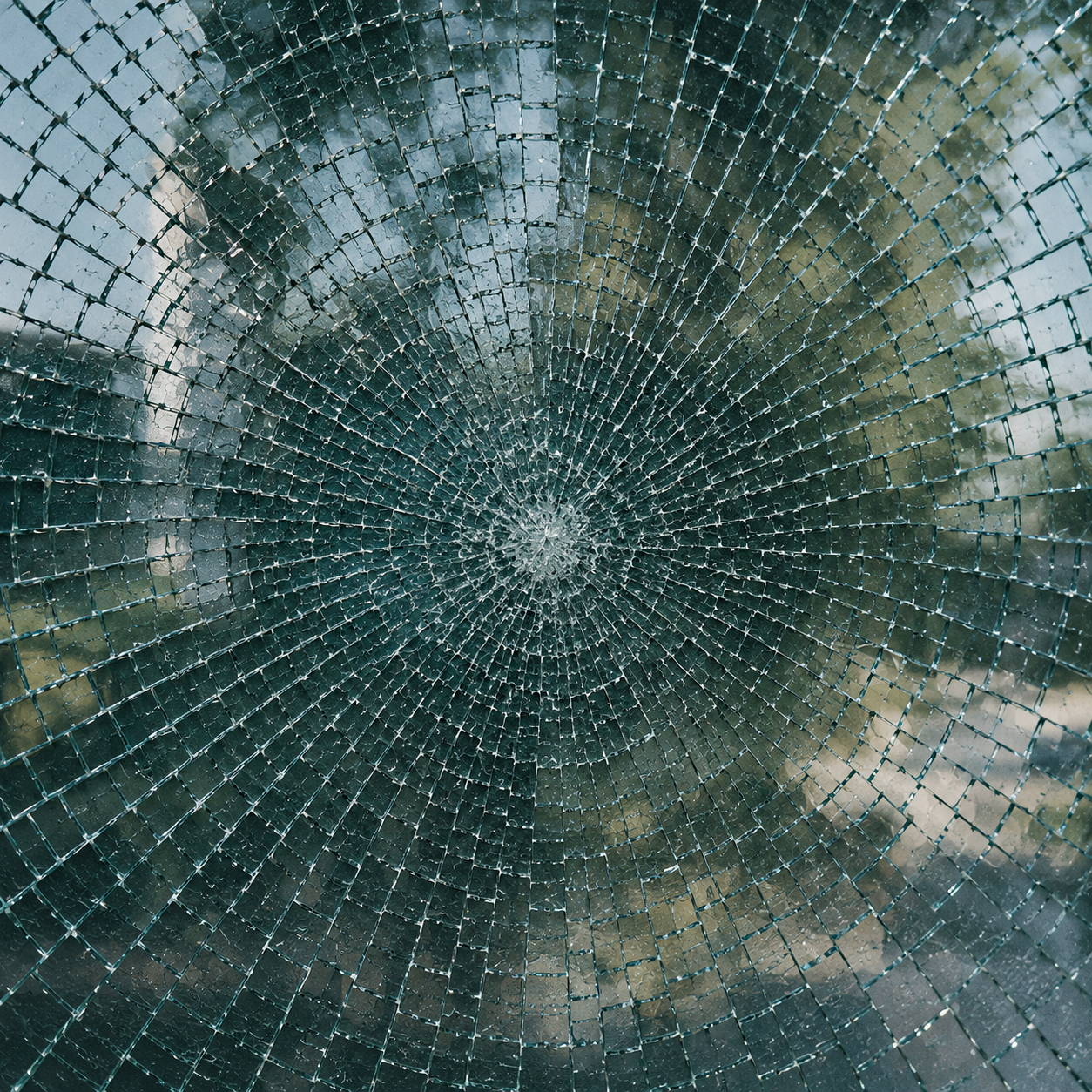
If safety is important to you, choose for your windows toughened or with laminated glass units. Safety glass helps you protect yourself and your family from possible injuries caused by glass breakage. Safety glass also deters unwanted attacks by burglars and intruders. Tempered and laminated glass help create a safe and secure home.
Safety glass is specially treated glass that becomes tougher and more resistant to breakage. The main types of safety glass are tempered and laminated glass. Safety is ensured both by the glass's overall strength and by its behaviour after breakage. Depending on the level of risk and accessibility, safety glass is used in different ways within glass units.
Tempered glass is heated above 600 degrees Celsius during the manufacturing process and then rapidly cooled. This process makes the glass up to five times stronger than ordinary glass.
Tempering affects the glass's breakage pattern, and as the tension is released the glass shatters into small pieces with blunt edges, preventing more serious injuries. Tempering is necessary to ensure personal safety and to prevent thermal breakage.
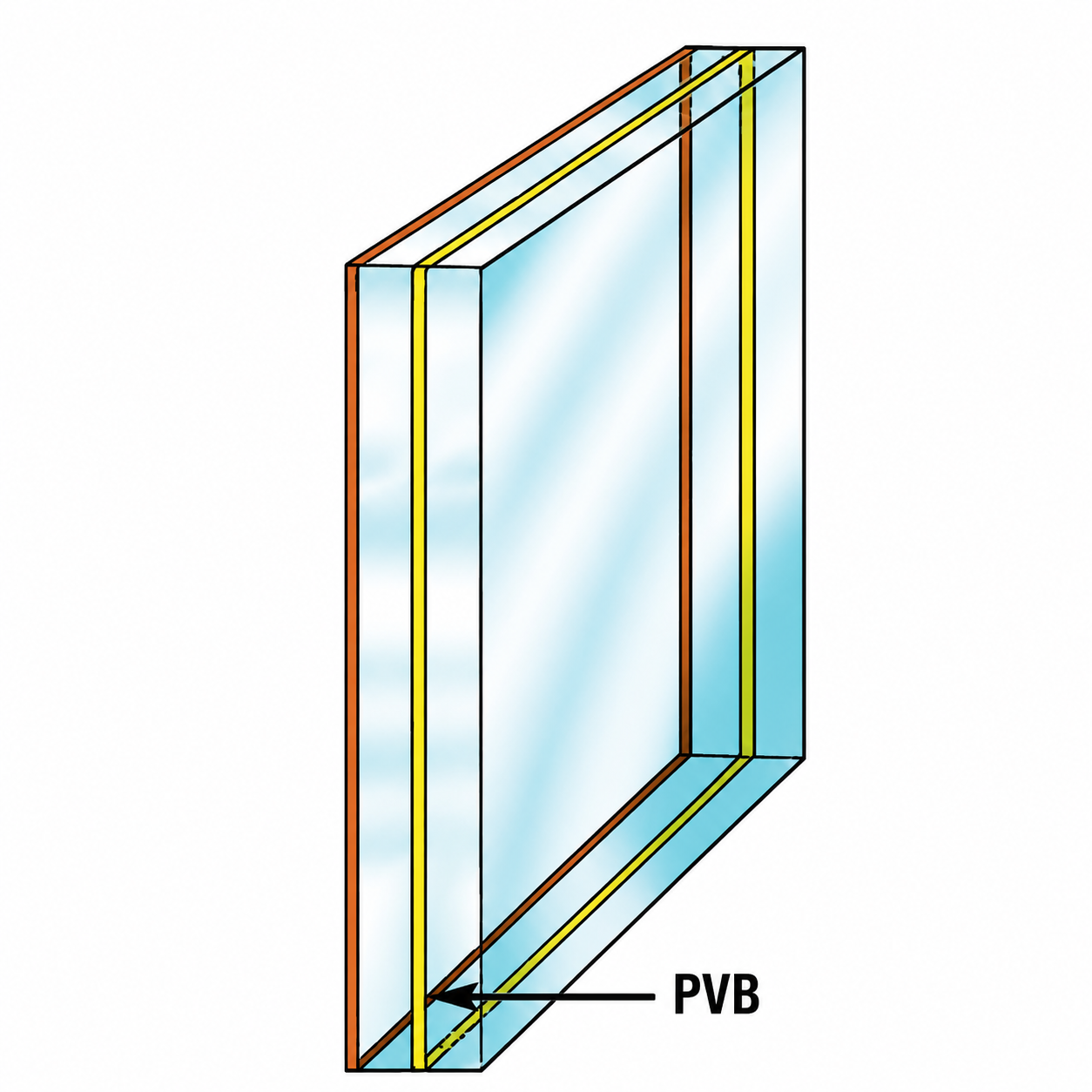
Laminated glass consists of two or more glass layers bonded together PVB film using the high-pressure autoclave method. When it breaks, the glass retains its integrity and therefore does not fall out of the opening. The greatest advantage of laminated glass: in situations where the glass must remain in the opening after breaking (e.g. to prevent it from falling out), laminated glass is the right choice. The PVB interlayer also blocks UV radiation and improves sound insulation. Laminated glass gains its safety properties during the lamination process. Two or more panes of glass are laminated together with PVB film. The film is fused with the glass layers under high pressure and at high temperature.
The PVB film makes laminated safety glass tough and hard to break. If the glass is overloaded, it breaks in a similar way to ordinary glass, but unlike ordinary glass the fragments do not scatter — they stay attached to the PVB film. The glass unit cracks but does not fall apart into shards, reducing the risk of cuts. Thanks to the PVB film, the glass unit also stays within the frame, reducing for example the risk of falling out of the window. If the glass does break, the fragments remain attached to the film, reducing the likelihood of life-threatening injuries.
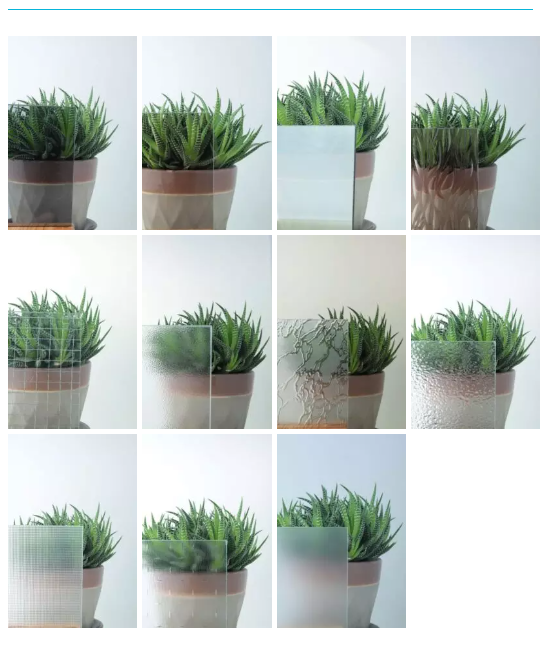
Patterned decorative glass has the corresponding ornament pressed onto one side. The result is achieved by passing hot glass through the appropriate rollers. This produces glass with a wide variety of surface patterns.
Patterned glass is used in places requiring privacy that is, where prying eyes need not see everything. However, it is worth remembering that visibility is limited in both directions — looking in as well as looking out.
Patterned glass is also attractive as a design element.
Our specialists will help you find the right glass unit solution for your project.